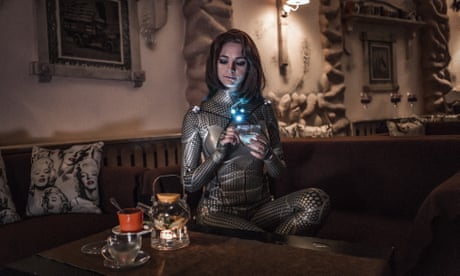
Faith in -196C: pioneers of resurrection – a photo essay

Nothin' to See Here Neon Sign

With death many people’s greatest fear, cosmists and transhumanists can offer a seductive myth of immortality.
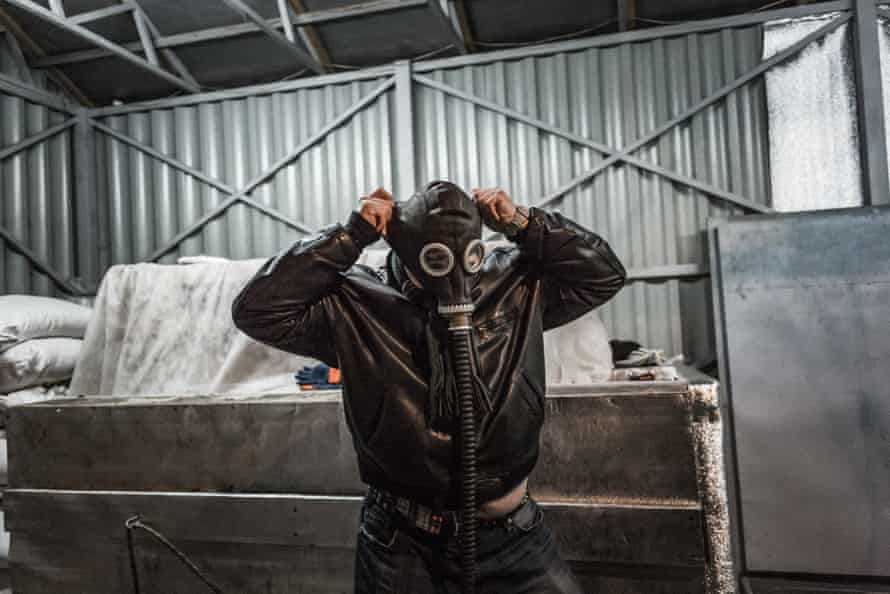
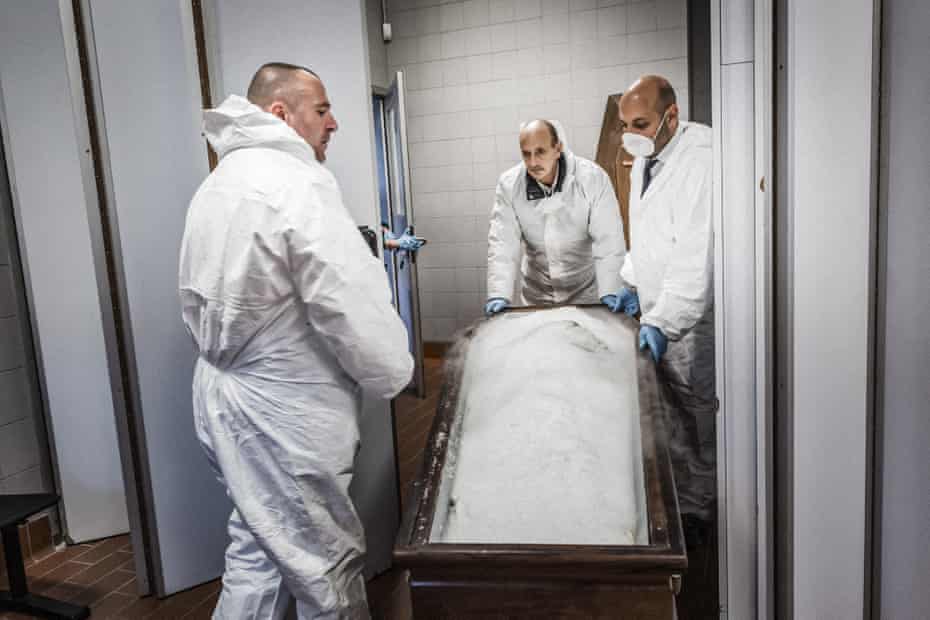
One of Kriorus’ technicians about to enter the cooling chamber before the immersion into liquid nitrogen. In the cooling chamber the bodies are covered with dry ice to homogeneously drop body temperature to -78C. The use of the mask is mandatory, because the carbon dioxide vapours produced by sublimation can cause asphyxia.
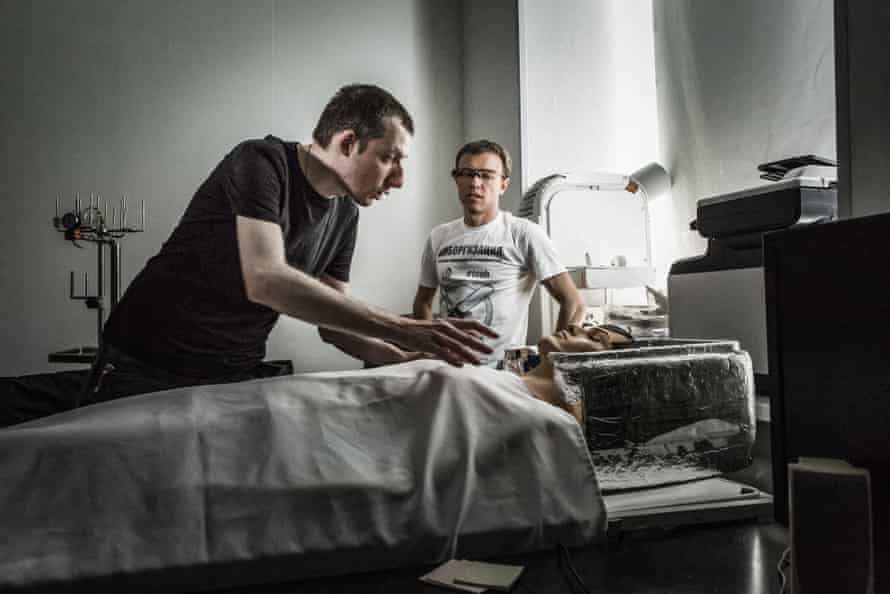
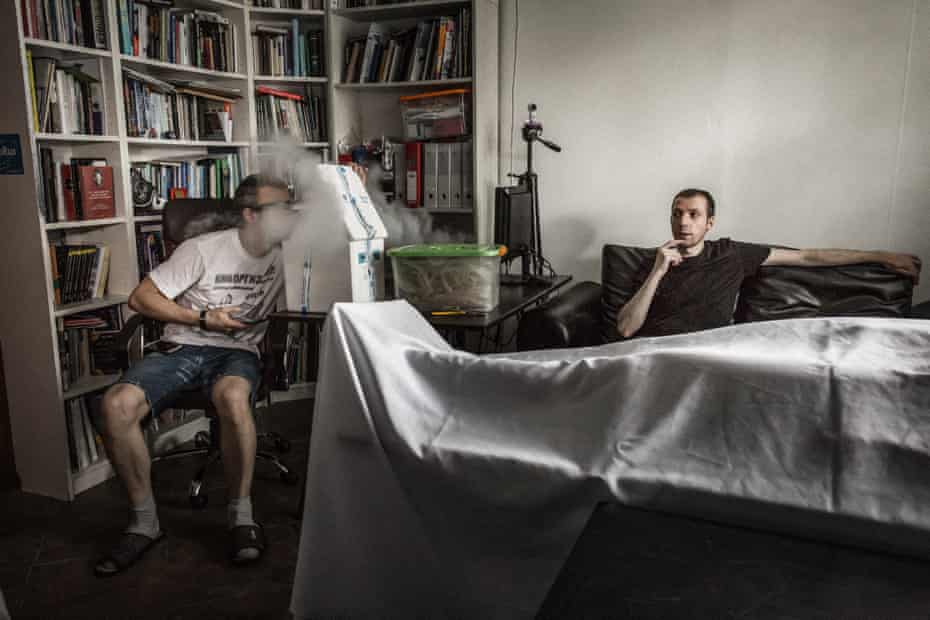
  • Alexey Samykin and Igor Trapeznikov – activists of the Russian transhumanist movement – inside Kriorus headquarter during the making of the company documentary by the German channel Galileo.
  • In Moscow at the end of the 19th century a librarian of poor origins started reflecting on how future human beings, raising themselves from a condition of conflict and divisiveness, would eventually be able to defeat evil and death through a technological and cultural revolution. His name was Nikolai Fedorovich Fedorov. In the long run, the philosopher’s beliefs permeated Russian culture, inspiring scientists, mystics and artists who shared a peculiar, spiritual-philosophic doctrine later known as cosmism.
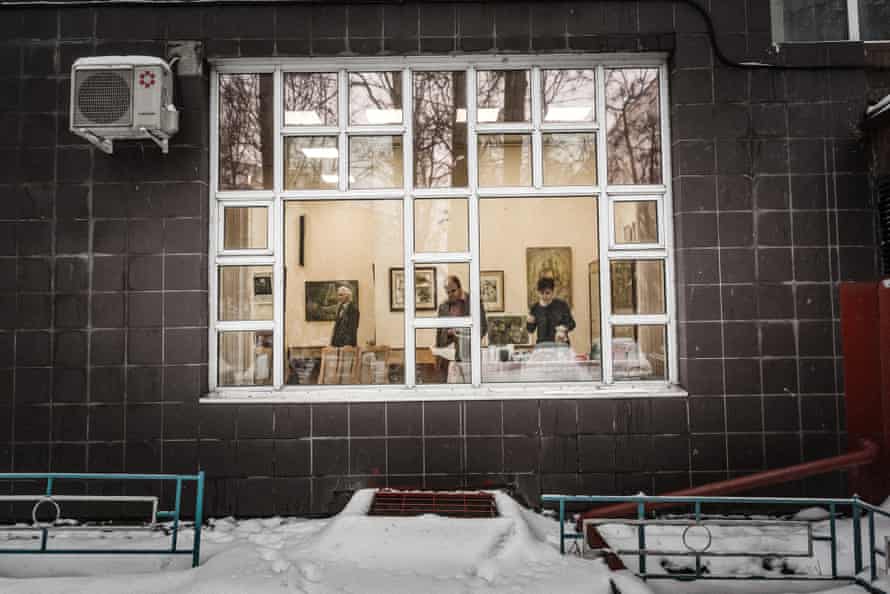
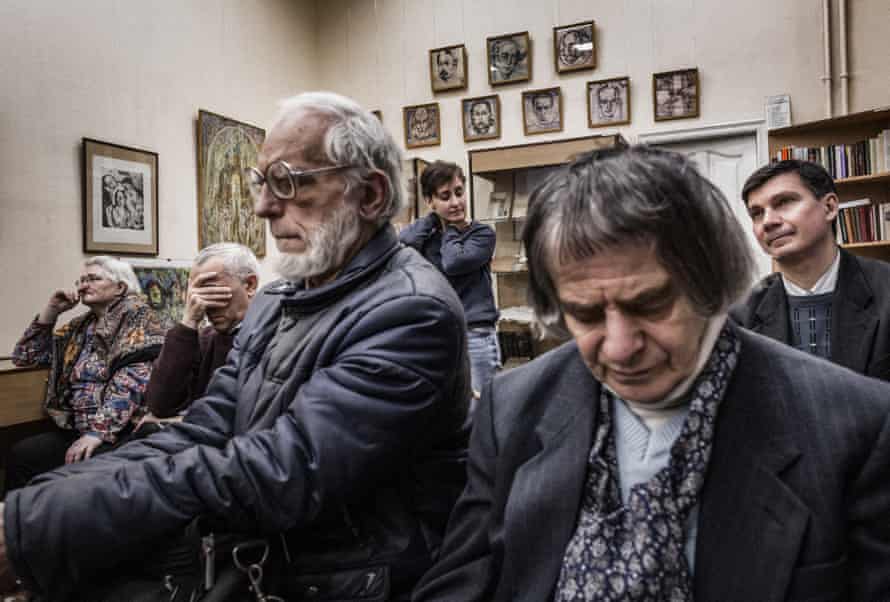
Moscow, Russian Federation, December 2017. In the musem-library named after Fedorov, some cosmists prepare celebrations on the occasion of the anniversary of Svetlana Semenova’s death. During the years, this place has represented the very heart of the Russian cosmist movement, and is to these days engaged in promoting and developing Fedorov’s ideas and thought.

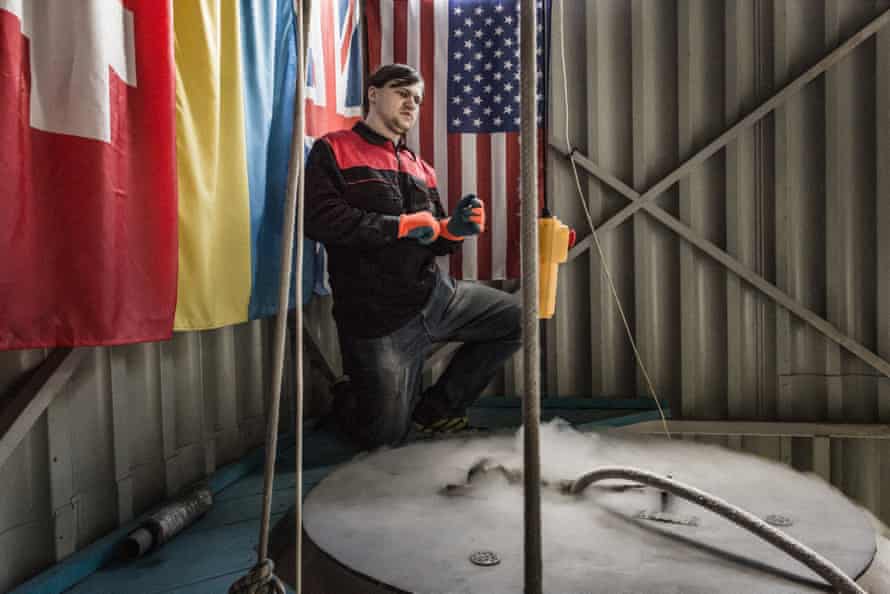
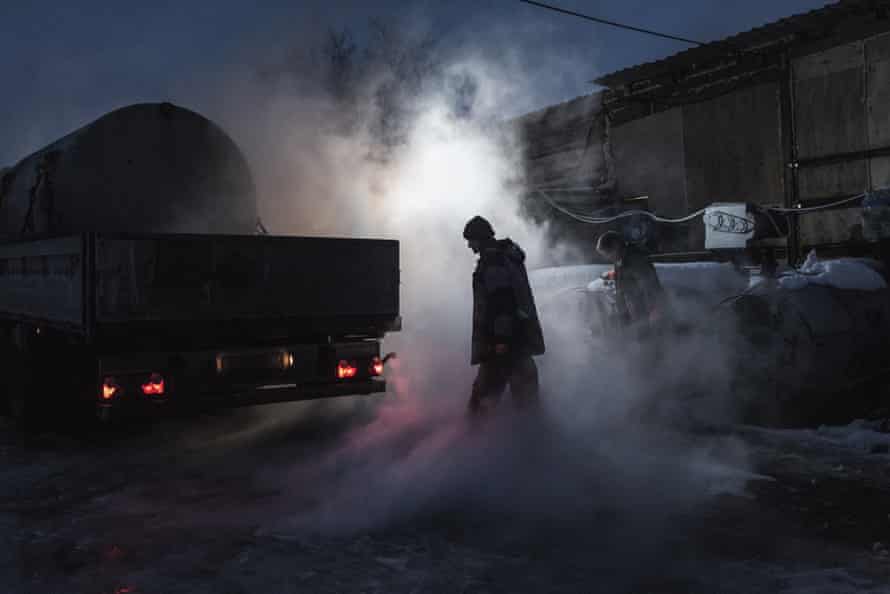
  • Outside a liquid nitrogen and dry ice factory called Pole of Cold at the periphery of Moscow during stockpiling operations. This company was founded by Russian transhumanists Eugeny Zimin and Andrey Shvedko, who previously worked for Kriorus. The cost of liquid nitrogen is about 10 rubles (£0.1) per litre while the cost of dry ice is higher, about 80 rubles (£0.8) per kg.

Cosmists during the annual meeting on the occasion of the anniversary of Svetlana Semenova’s death.

Anastasia Gracheva, activist of the Russian Cosmist Movement
Russian transhumanists established KrioRus, the first cryopreservation society in Eurasia, in 2003. Today it conserves 81 human bodies, from Russia, the US, the Netherlands, Japan, Israel, Italy, Switzerland and Australia, as well as animals. It is based in Sergiev Posad, a residential neighbourhood more than two hours north of Moscow.
Filippo Polistena, founder of the Polistena Human Cryopreservation, and his collaborators prepare the body of a cryopatient to be sent to Russia in a cemetery in Bologna, Italy, November 2017. Kriorus is making numerous deals outside of Russia to promote the practice of hybernation and carries out directly the training of collaborators.
  • During the twice-a-week storage maintenance, Ivan Stepin, deputy director of Kriorus and member of the transhumanist moment, waits for the end of the storage filling.
  • Fedorov’s ideas have been spread by Russian cosmists, whose thoughts have merged into a wider international philosophic movement known as transhumanism.
    Alexey Samykin and Igor Trapeznikov activists of the Russian Transhumanist movement inside Kriorus headquarter during a Cryopreservation exhibition for a documentary about the company by the German channel Galileo. Bodies’ cryopreservation costs about 35.000 USD while brains’ cryopreservation costs about 18.000 USD. Cryopreservation of humans is not reversible with present technology; cryonicists hope that medical advances will someday allow cryopreserved people to be revived.

Transhumanism is a cultural movement that encourages scientific and technological discoveries to enhance human physical and cognitive capacities. It believes that a future most people dismiss as science fiction is just around the corner. Transhumanists say that by 2045, humanity will experience “singularity”, a theory predicting human and artificial intelligence can be fused.